Silky, stretchy, and deeply satisfying, this almond flour fufu is the keto swap we reach for when a pot of soup needs something to scoop it up with.
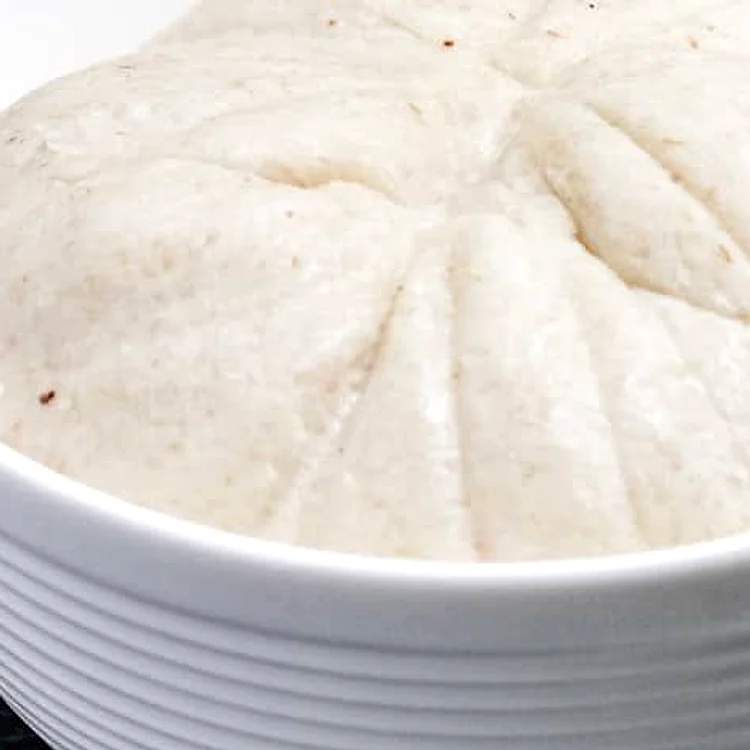
It comes together with just two pantry ingredients and about ten minutes of hands-on work, so it fits easily into a busy weeknight.
Why you’ll love this recipe
We think this is one of the easiest low-carb alternatives to traditional fufu. It has a smooth, mild flavor and a chewy texture that holds up well against rich stews. Almond flour and psyllium keep the dish keto-friendly without any gritty bite.
Ingredients
Full quantities are in the recipe card below.
- Almond flour: provides the body and gentle nutty flavor. Substitute with finely ground blanched almond flour only, as coarser meal will give a grainy result.
- Psyllium husk: binds the dough and creates the stretch that makes fufu special. Substitute with psyllium husk powder in the same amount, not whole husks.
- Boiling water: hydrates the psyllium so it turns into a dough. Substitute with hot bone broth for a richer, more savory flavor.
- Cool water: keeps your hands from sticking while you shape the dough. Substitute with a light coating of avocado oil if you prefer.
- Soup or stew: the classic partner for fufu, used for serving rather than cooking the dough. Substitute with egusi, okra soup, or a simple tomato stew.
- Extra almond flour: useful for dusting the counter if the dough feels tacky. Substitute with a little coconut flour, using sparingly because it absorbs more liquid.
How to make almond flour fufu
Step 1: Whisk the dry ingredients
Combine 1 cup almond flour and 1.5 tbsp psyllium husk in a heatproof bowl. We whisk first so the psyllium spreads evenly and doesn’t clump when hot water hits it.
Step 2: Add the boiling water
Pour in about 1 cup boiling water gradually while stirring with a sturdy spatula. Adding it slowly lets you stop once the mixture feels thick and cohesive.
Step 3: Stir until a dough forms
Keep stirring until a sticky, shaggy mass comes together. Psyllium absorbs water quickly and starts to gel, which is what gives the fufu its elasticity.
Step 4: Let it rest
Cover the bowl and let it sit for 2 to 3 minutes. This gives the fiber time to fully hydrate, which makes the dough far easier to handle.
Step 5: Knead while warm
Dip your hands in cool water and knead for 1 to 2 minutes until smooth and stretchy. Wet hands keep the dough from sticking and protect your fingers from the heat.
Step 6: Shape and serve
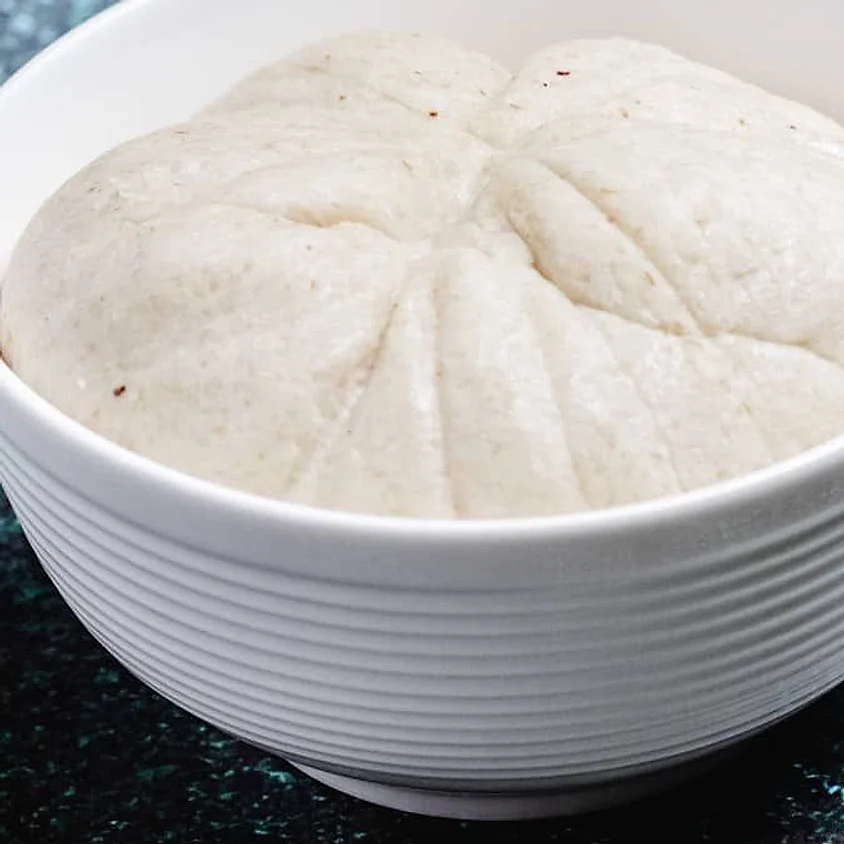
Form the dough into a smooth ball or divide it into portions. Serve warm alongside your soup or stew, tearing off small pieces with your fingers.
Tips
- Measure the psyllium carefully: too much makes the dough rubbery, while too little makes it crumble when kneaded.
- Use boiling water: hot water activates the psyllium faster, which gives you a smoother, more cohesive dough.
- Add water slowly: the amount needed varies with humidity, so pause once the dough comes together.
- Keep your hands wet: this prevents sticking and makes shaping much more comfortable.
- Serve it warm: fufu firms up as it cools, so it tastes best fresh from the bowl.
- Rest the dough: a short rest makes kneading easier and results in a softer texture.
- Watch the texture: if the dough tears, add a teaspoon of hot water and knead again.
Storage and make ahead
Fufu is best eaten right after it is made, while it is soft and stretchy. If you have leftovers, wrap them tightly in plastic wrap and refrigerate for up to three days.
To reheat, sprinkle a little water over the dough, cover it, and microwave in 20-second bursts until warm. We find this restores the softness much better than reheating it dry.
Variations
Herbed fufu
Knead in finely chopped fresh herbs such as parsley or cilantro for a fresh, bright flavor that suits grilled meats well.
Savory broth fufu
Use hot bone broth instead of plain water. The dough absorbs the savory flavor and becomes a more satisfying side for rich stews.
Frequently Asked Questions
Is almond flour fufu keto friendly?
Yes, it is naturally low in carbs because it relies on almond flour and psyllium husk instead of cassava or corn flour. Check your serving size and soup pairing to keep your daily totals on track.
Can I use a different flour instead of almond flour?
Almond flour gives the best texture and mild flavor here. Coconut flour absorbs much more liquid, so it would need a different ratio and will taste noticeably different from the original.
Why is my fufu crumbly?
Crumbly dough usually means not enough water or the psyllium was not fully hydrated. Add a teaspoon of hot water at a time and knead until smooth and stretchy.
What do you serve with almond flour fufu?
It pairs well with egusi soup, okra soup, tomato stew, and rich braised meats. Its mild flavor lets the sauce shine while the dough soaks up every last drop.
Can I make fufu without psyllium husk?
Psyllium is what gives the dough its stretch and binding power. Without it, almond flour alone will not form a cohesive dough, so we recommend keeping it in the recipe.
 Recipe byNadia Brooks
Almond Flour Fufu
Ingredients
- 1 cup almond flour
- 1.5 tbsp psyllium husk
- About 1 cup boiling water, plus more as needed
- Cool water for shaping
Instructions
- Whisk 1 cup almond flour and 1.5 tbsp psyllium husk together in a heatproof bowl.
- Pour in about 1 cup boiling water gradually while stirring with a sturdy spatula.
- Stir until a sticky, shaggy dough forms and no dry flour remains.
- Cover and let the dough rest for 2 to 3 minutes to hydrate fully.
- Dip your hands in cool water and knead for 1 to 2 minutes until smooth and stretchy.
- Shape into a ball or portions and serve warm with soup or stew.
Notes
- If the dough feels dry, add hot water one teaspoon at a time until it becomes smooth.
- Store leftovers wrapped in the refrigerator for up to three days and reheat with a splash of water.